


Complete Livestock Feed Pellet Production Solutions
Tongfu provides customized livestock feed pellet production solutions for farms, livestock producers, feed manufacturers, agricultural businesses, and commercial animal farming operations.
Our livestock feed pellet machines and complete feed production equipment are designed to process a wide range of grains, forage, protein sources, agricultural by-products, minerals, and other suitable feed ingredients into uniform pellets.
From a standalone livestock feed pellet machine for a farm to a complete automated livestock feed production line for commercial feed manufacturing, Tongfu can configure the right solution according to your livestock species, feed formula, raw materials, required capacity, pellet size, and automation requirements.
What Is Livestock Feed Pellet Production?
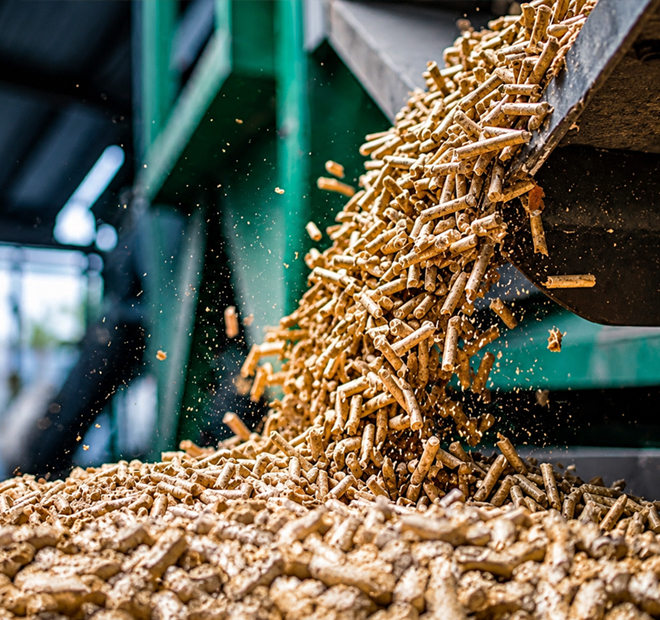
Livestock feed pellet production is the process of converting formulated animal feed ingredients into compact, uniform pellets through a series of processing stages.
A typical livestock feed pellet production process includes: Raw Material Receiving → Crushing → Batching → Mixing → Conditioning → Pelletizing → Cooling → Screening → Packing
The exact process depends on the livestock species, feed formula, raw material characteristics, required production capacity, and final pellet specifications.
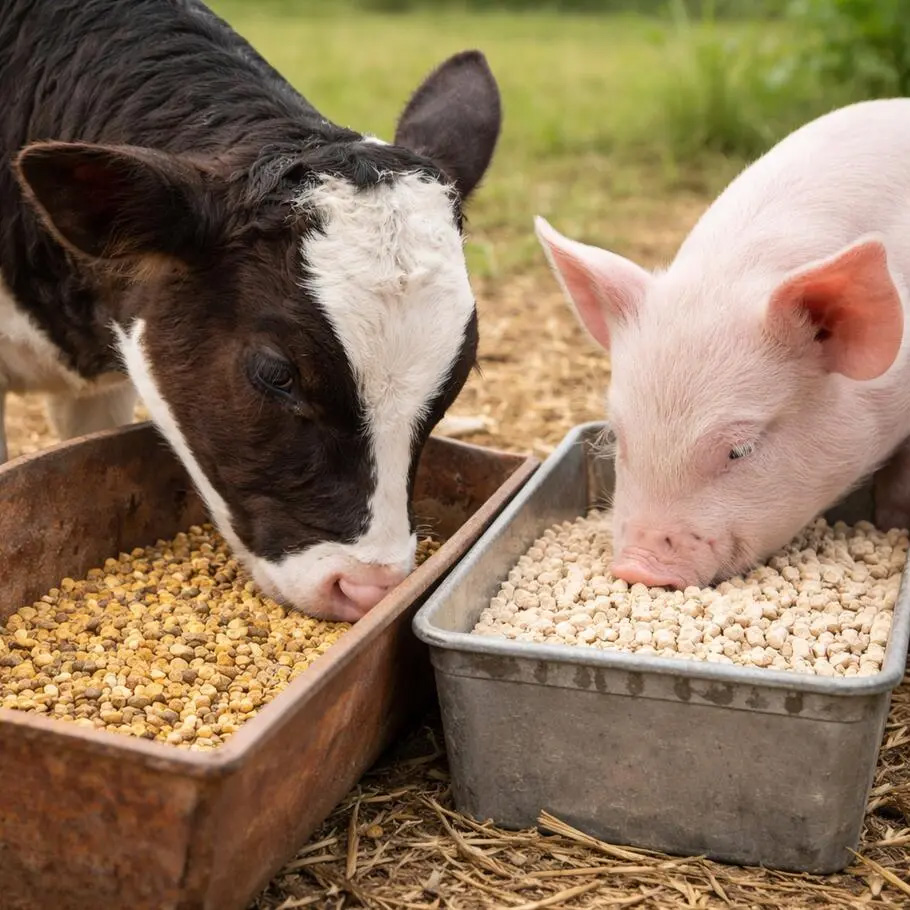
Livestock feed pellets can be produced for cattle, pigs, sheep, goats, rabbits, and other farm animals.
Livestock Feed Pellet Production for Different Animals
Different livestock species have different nutritional requirements and feed characteristics. Tongfu can configure suitable feed processing equipment according to the target animal and production requirements.


Livestock Feed Pellet Production Process
A complete livestock feed production line can integrate several processing stages.
Request Factory Quotation for Pellet Machines
Send your raw material, required capacity, and factory layout. Tongfu engineers will recommend a suitable pellet machine or production line plan.

Livestock Feed Production Lines for Different Capacities
Small-Scale Livestock Feed Pellet Production
Small farms may prefer a compact livestock feed pellet production system instead of a fully automated industrial line.
A basic system may include:
Crushing → Mixing → Pelletizing → Cooling → Screening
This configuration is suitable for farms that have their own feed ingredients and want to produce feed on-site.
A standalone livestock feed pellet machine can also be used when crushing and mixing are already available.

Industrial Livestock Feed Pellet Production
For larger livestock feed manufacturing projects, Tongfu can design an automated production line according to the required capacity and factory layout.
A typical industrial process can be arranged as:
Raw Material Receiving → Automatic Batching → Crushing → Mixing → Conditioning → Pelletizing → Cooling → Screening → Finished Feed Storage → Packing
The final system can be configured according to:Target Production Capacity, Feed Formula, Raw Material Characteristics, Livestock Species, Pellet Diameter, Factory Space, Automation Requirements, Packaging Method.

Commercial Livestock Feed Production
Commercial livestock feed manufacturers normally require higher production efficiency and more consistent processing.
A commercial livestock feed production line can integrate:Automatic Raw Material Dosing, Feed Crushing, High-Efficiency Mixing, Steam Conditioning, Feed Pelletizing, Pellet Cooling, Screening, Material Conveying, Finished Feed Storage, Automatic Packing.
This configuration allows different processing stages to operate as an integrated production system.

Livestock Feed Pellet Machine vs. Complete Production Line
A standalone pellet machine and a complete livestock feed production line are suitable for different project requirements.
| Feature | Livestock Feed Pellet Machine | Complete Production Line |
| Crushing | Separate | Integrated |
| Batching | Manual / Separate | Automatic Option |
| Mixing | Separate | Integrated |
| Pelletizing | Yes | Yes |
| Cooling | Separate / Optional | Integrated |
| Screening | Separate / Optional | Integrated |
| Packing | Separate | Automatic Option |
| Production Scale | Small / Medium | Medium / Large |
| Automation | Lower | Higher |
| Application | Farms / Small Businesses | Commercial Feed Plants |
How to Choose a Livestock Feed Pellet Machine
Choosing the right livestock feed pellet machine requires consideration of several factors.
1. Identify the Target Livestock
2. Provide Your Feed Formula
3. Determine Your Production Capacity
4. Select the Pellet Diameter
5. Evaluate Raw Materials
6. Choose the Automation Level
7. Consider Future Expansion
Factory-Direct Pellet Machine Supply
Tongfu is a manufacturing factory specializing in pelletizing equipment and production solutions. Working directly with the manufacturer allows customers to communicate with the engineering and production teams throughout the project.
Customized Production Solutions
Every livestock feed project is different. Tongfu considers raw material characteristics, production capacity, pellet size, automation level, and factory conditions when designing the equipment configuration.

Complete Equipment Integration
From the core livestock feed machine to crushing, drying, cooling, conveying, screening, and packing equipment, Tongfu can integrate the major stages of the production process into a complete solution.

Professional Technical Support
Our engineering team can assist with equipment selection, production line configuration, installation guidance, operation, and maintenance.
OEM and Customized Options
Machine configuration, electrical specifications, pellet diameter, production capacity, and other requirements can be discussed according to the customer's market and project conditions.
Frequently Asked Questions About Livestock Feed Pellet Production
-
What is a livestock feed pellet machine?
A livestock feed pellet machine is equipment used to compress prepared animal feed mixtures into uniform pellets through a pellet die.
-
What animals can be fed with livestock feed pellets?
Livestock feed pellets can be produced for cattle, pigs, sheep, goats, rabbits, and other farm animals, depending on the feed formulation and pellet specifications.
-
What materials can be used to make livestock feed pellets?
Common materials include corn, wheat, barley, soybean meal, wheat bran, rice bran, alfalfa, hay, grass, protein sources, minerals, vitamins, and other suitable feed ingredients.
-
What is the difference between a livestock feed pellet mill and a feed production line?
A livestock feed pellet mill performs the pelletizing process. A complete production line can include raw material handling, crushing, batching, mixing, conditioning, pelletizing, cooling, screening, conveying, storage, and packing.
-
Do I need a hammer mill for livestock feed production?
If your raw materials require particle-size reduction, a hammer mill or feed crusher may be required before mixing and pelletizing. The exact configuration depends on the raw materials and feed formula.
-
Do livestock feed pellets need cooling?
Fresh pellets normally need to be cooled before storage and packing. A suitable cooling system helps stabilize the pellets after the pelletizing process.
-
Can Tongfu design a complete livestock feed production line?
Yes. Tongfu can configure a complete livestock feed production line according to your livestock species, feed formula, raw materials, production capacity, pellet size, factory layout, and automation requirements.
-
Can Tongfu supply a small livestock feed pellet machine?
Yes. Tongfu can supply standalone livestock feed pellet machines and compact feed production systems for farms and small livestock businesses.
-
Can Tongfu customize livestock feed pellet production equipment?
Yes. Equipment configuration can be customized according to raw materials, feed formula, production capacity, pellet specifications, electrical requirements, factory space, and automation level.
Planning a cattle, pig, sheep, goat, or rabbit feed pellet production project?
Tell Tongfu your target livestock, feed ingredients, required production capacity, desired pellet diameter, and project location.