This bar serves to notify visitors of important updates

Home Pellet Plant Design & Layout

Pellet Plant Design & Layout

Customized Pellet Plant Design and Factory Layout for Efficient Pellet Production

Tongfu provides pellet plant design and layout solutions for customers planning to build, upgrade, or expand commercial and industrial pellet production facilities.


Customized Plant Design

Efficient Equipment Matching

Practical Factory Layout

Safe & Expandable Design

Multiple Pellet Applications

What Is Pellet Plant Design?

Pellet plant design is the process of planning the complete production system before equipment installation.

It covers more than the position of individual machines.A complete pellet plant design considers:

Raw Material Handling

Production Capacity

Processing Technology

Equipment Configuration

Material Flow

Factory Dimensions

Equipment Layout

Conveying Systems

Electrical Control

Dust Collection

Packing

Finished Product Storage

Maintenance Access

Operator Movement

Safety

Future Expansion

The objective is to create a production system where raw materials can move efficiently from receiving to finished-product storage.

A typical material flow is:Raw Material → Processing → Pelletizing → Cooling → Screening → Packing → Storage

Tongfu develops the layout around the actual production process instead of simply arranging machines inside the available building.

Why Is Pellet Plant Layout Important?

A well-designed pellet plant layout can directly influence production efficiency, operating costs, maintenance convenience, and future expansion.

Easier Operation

Operators should be able to access key machines and control points conveniently.

Better Space Utilization

A suitable layout can make better use of available factory length, width, and height.

Easier Maintenance

Sufficient space should be reserved around major equipment for inspection, maintenance, and replacement.

Easier Future Expansion

Space and infrastructure can be reserved for additional equipment or increased production capacity.

Efficient Material Flow

Equipment should be arranged so that materials move logically through the production process with minimal unnecessary transportation.

Reduced Material Handling

Proper equipment positioning can reduce unnecessary conveying distance and material transfer.

Improved Production Management

A logical layout makes it easier to understand and manage the complete production process.

Safer Working Environment

Equipment arrangement, access routes, electrical systems, dust collection, and emergency access should be considered during the design stage.

Pellet Plant Design Based on Production Capacity

Production capacity is one of the most important factors in pellet plant design.

Different production targets require different equipment configurations and factory layouts.
Typical project capacities may include:
Small Pellet Production
Medium-Scale Pellet Production
Commercial Pellet Production
Industrial Pellet Production
Large-Scale Pellet Manufacturing

For example, a production line designed for 2 tons per hour may require a significantly different equipment arrangement from a 10-ton-per-hour or 20-ton-per-hour industrial plant.

Tongfu considers the complete production flow when determining equipment capacity and layout.

The goal is to avoid creating bottlenecks where one production stage cannot keep up with the others.
blog

Pellet Plant Design Process

Tongfu follows a structured approach when developing a pellet plant layout.

Raw Material Analysis

The first step is understanding the material to be processed.

Important characteristics include:
Material Type
Moisture Content
Particle Size
Bulk Density
Material Hardness
Fiber Characteristics
Impurities

Different materials require different preparation processes.

Determine Production Capacity

The required production output should be clearly defined.

For example:
2 Tons/Hour → 5 Tons/Hour → 10 Tons/Hour → 20 Tons/Hour → Larger Capacity

The actual equipment configuration depends on the required production capacity and material characteristics.


Determine Pellet Specifications

The plant design should consider the required finished pellet specifications.

Important parameters include:
Pellet Diameter
Pellet Length
Pellet Density
Moisture
Final Application

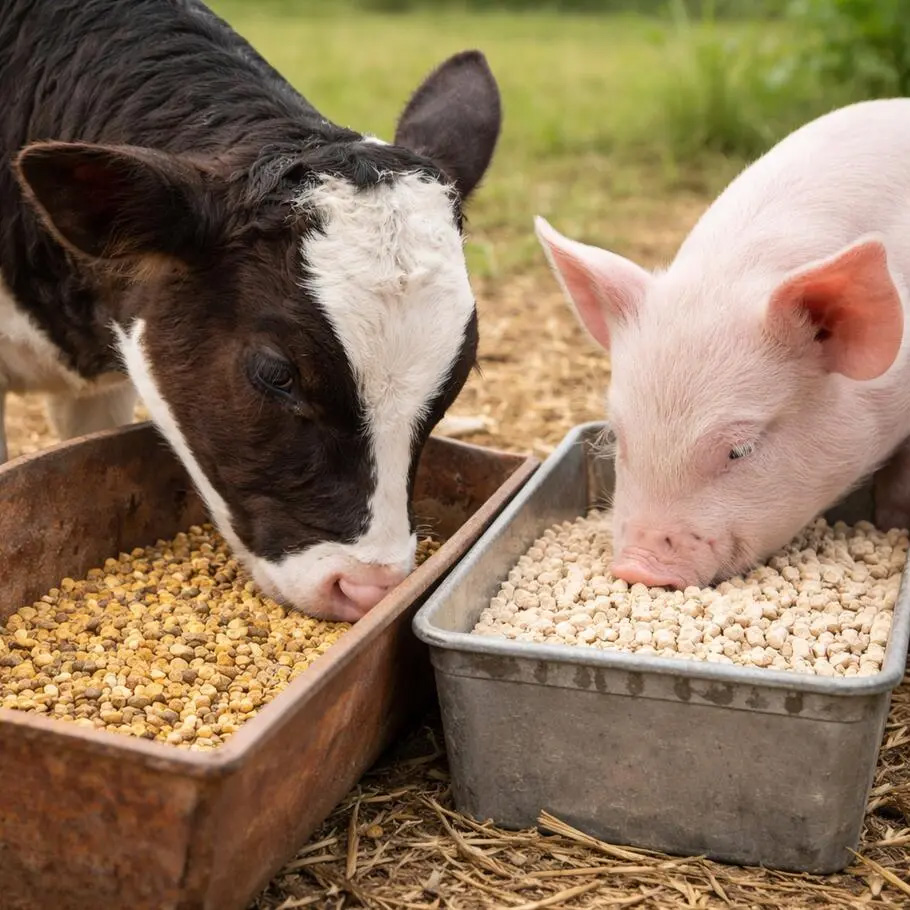
Common pellet applications include fuel pellets and animal feed pellets.


Develop the Production Process

The process flow is established according to the raw material and final product.

A biomass pellet production process may include:
Receiving → Crushing → Drying → Grinding → Pelletizing → Cooling → Screening → Packing

A feed pellet production process may include:

Receiving → Cleaning → Grinding → Batching → Mixing → Pelletizing → Cooling → Screening → Packing

Not every plant requires every stage.

Select and Match Equipment

After determining the production process, appropriate equipment is selected.

Typical equipment may include:
Hopper
Feeder
Conveyor
Crusher
Chipper
Dryer
Hammer Mill
Mixer
Pellet Mill
Pellet Cooler
Pellet Screener
Packing Machine
Dust Collector
Electrical Control System
The capacity of each machine should be matched to the overall production flow.

Develop the Factory Layout

Equipment is arranged according to:
Material Flow
Factory Dimensions
Equipment Size
Maintenance Access
Operator Access
Conveying Distance
Electrical Requirements
Dust Collection
Storage Requirements
Future Expansion


Plan Automation

Automation requirements should be considered during the layout stage.

Possible automated functions include:
Automatic Feeding
Automatic Conveying
Automatic Pelletizing
Automatic Cooling
Automatic Screening
Automatic Packing
Centralized Electrical Control


Planning automation early can avoid costly modifications later.

tonglanbeijingtu2

Typical Pellet Plant Layout

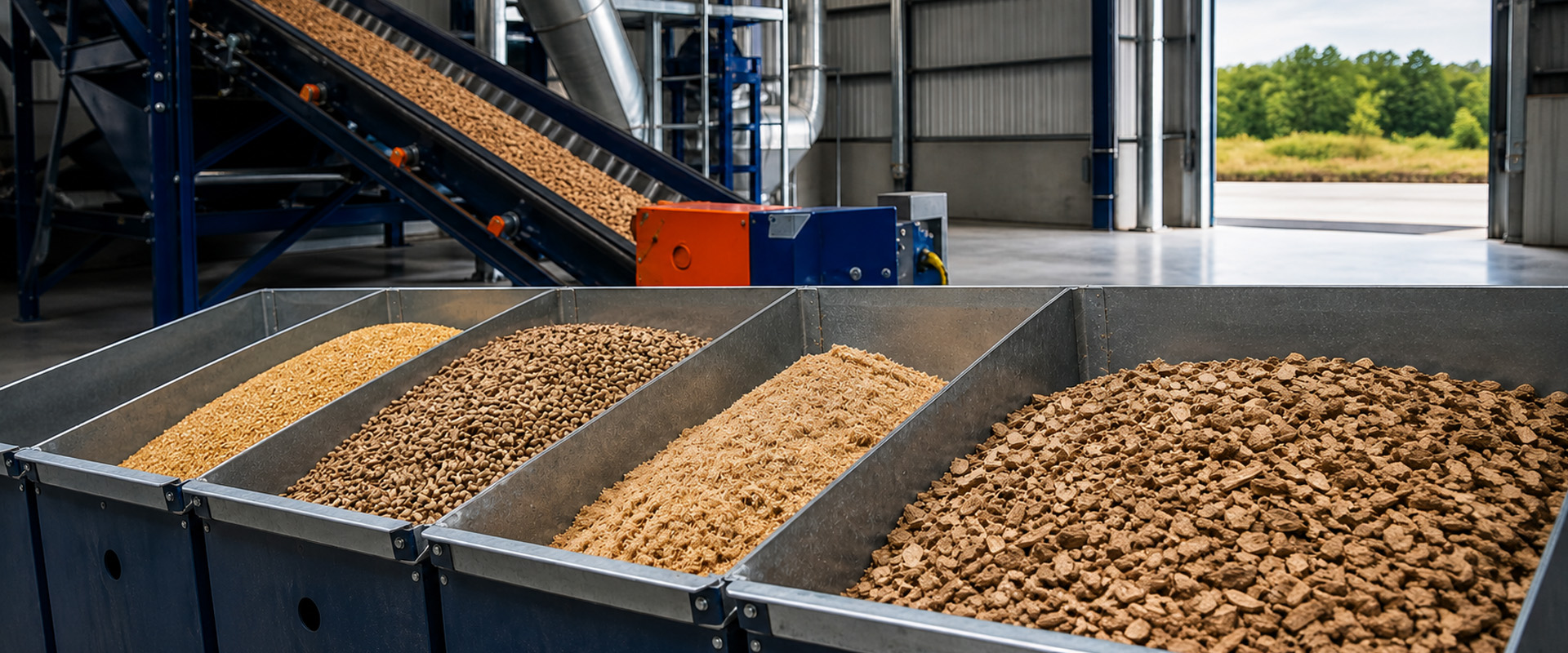
A typical pellet production facility can be divided into several functional areas.

01

Raw Material Storage

Raw materials are received and stored before processing.

Depending on the material, storage may include:

Raw Material Warehouse, Storage Bins, Hoppers, Outdoor Storage, Silo Systems.

The storage area should provide sufficient capacity for continuous production.

02

Raw Material Preparation

This section prepares raw material for pelletizing.

It may include:

Cleaning, Chipping, Crushing, Drying, Grinding.

The exact configuration depends on the material.

03

Pelletizing Section

The pelletizing area contains the core pellet production equipment.

It may include:Feed Hopper,Feeder, Pellet Mill, Lubrication System, Discharge Conveyor.

The layout should provide sufficient space for operation and maintenance.

04

Cooling and Screening Section

Fresh pellets are transferred to the cooling system.

After cooling, pellets can be screened to remove fines and undersized material.

Typical equipment includes:Pellet Cooler, Pellet Screener, Conveyors ,Return System.

05

Packing Section

Finished pellets can be automatically or manually packed.

06

Finished Product Storage

Finished pellets are stored in a clean, dry area before shipment or further distribution.

Raw Material Storage → Preparation → Pelletizing → Cooling → Screening → Packing → Finished Product Storage
banner

Wood Pellet Plant Design & Layout

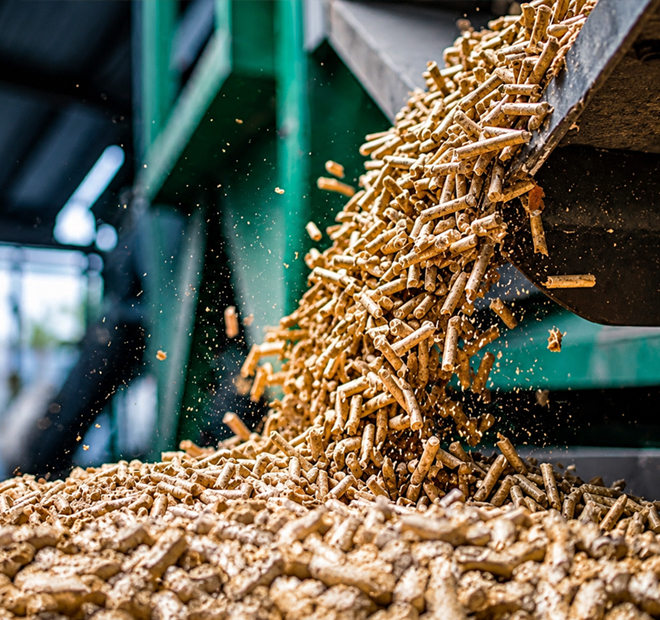
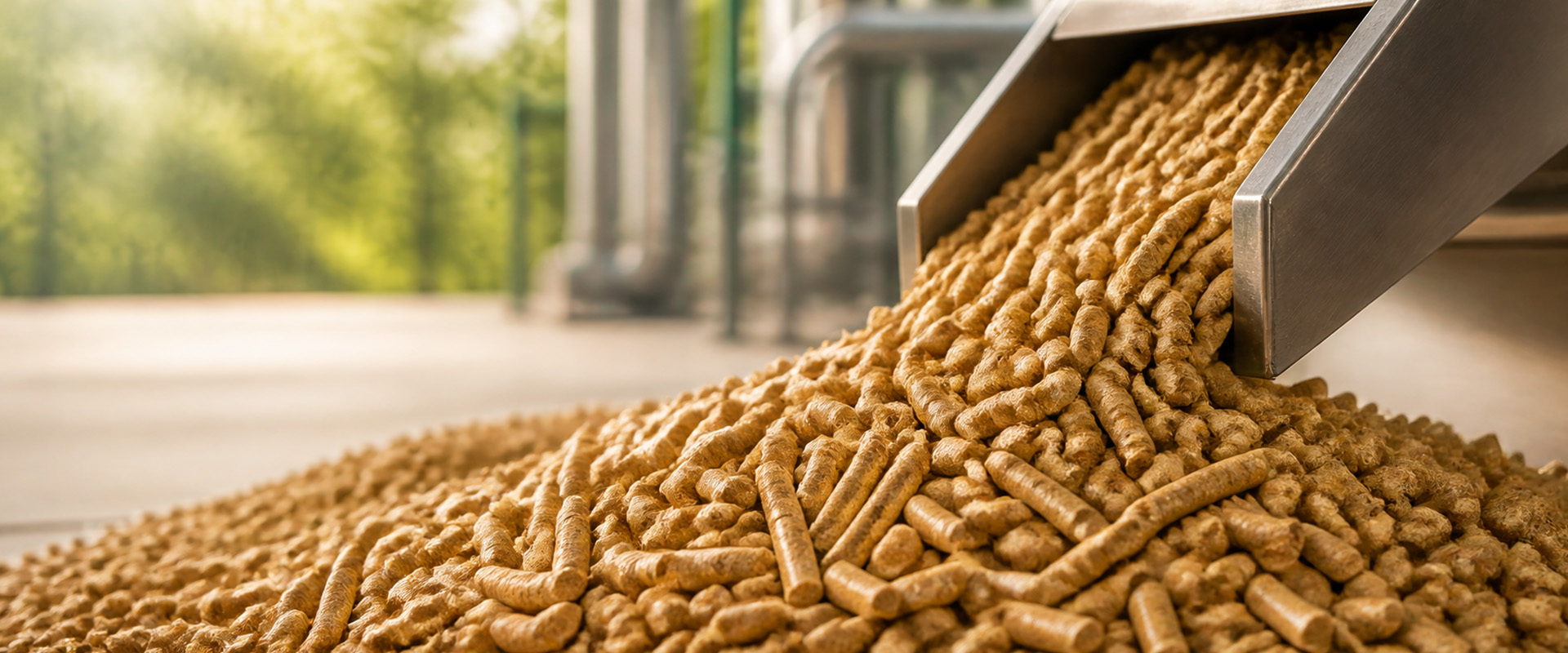
Tongfu provides customized layouts for wood pellet plants using suitable wood residues.


Potential raw materials include:

SawdustWood ShavingsWood ChipsForestry ResiduesWood Processing Waste


A typical wood pellet plant process is:

Wood Storage → Chipping/Crushing → Drying → Grinding → Pelletizing → Cooling → Screening → Packing


For high-moisture materials, the drying system becomes an important part of the plant design.


The layout should also consider raw material storage capacity because wood residues can occupy significant storage space.

Biomass Pellet Plant Design & Layout

Biomass pellet plants can process a wide range of agricultural and biomass residues.


Examples include:

Rice HuskWheat StrawCorn StalksCorn CobsPeanut ShellsSunflower HuskCotton StalksAgricultural Residues


A typical biomass pellet plant may include:

Raw Material Storage → Crushing → Drying → Grinding → Pelletizing → Cooling → Screening → Packing


Different biomass materials can require different processing equipment.


Tongfu develops the layout according to the actual material characteristics rather than using a fixed plant configuration.

Biomass Fuel Pellet Production banner
animal feed

Animal Feed Pellet Plant Design & Layout

Feed pellet plants require additional process stages compared with many biomass fuel pellet plants.


A typical feed pellet production process includes:

Raw Material Receiving → Cleaning → Grinding → Batching → Mixing → Pelletizing → Cooling → Screening → Packing


Depending on the feed formula, the plant may also require:

Automatic BatchingFeed MixerIngredient StorageSilo System

Molasses or Liquid AdditionMicro-Ingredient System


The layout should ensure accurate material flow between ingredient handling, mixing, pelletizing, cooling, and packing.

Automatic Pellet Plant Layout

Automation should be considered as part of the plant layout rather than added after the factory is completed.An automatic pellet plant may integrate:

Turnkey Pellet Production Solutions banner
Automatic Feeding
Controls the supply of material into the processing system.
Automatic Conveying
Transfers materials between production stages.
Automatic Pelletizing
Coordinates material feeding and pellet mill operation.
Automatic Cooling
Automatically transfers and cools freshly produced pellets.
Automatic Screening
Separates qualified pellets from fines and undersized material.
Automatic Packing
Automatically weighs, fills, seals, and conveys finished pellet bags.
Centralized Control
Allows operators to monitor and control major equipment from a central control system.

Pellet Plant Layout by Factory Type

Different buildings require different layout strategies.


Single-Story Pellet Plant

A single-floor factory can use horizontal material flow.


Typical arrangement:

Raw Material → Processing → Pelletizing → Cooling → Packing → Storage


This design is relatively straightforward and can simplify equipment maintenance.


Multi-Level Pellet Plant

A multi-level design can use gravity to assist material movement between certain processing stages.


This can reduce some conveying requirements and make better use of vertical factory space.

Wood Pellet Production Project Support

Pellet Plant Layout Considerations

A professional pellet plant layout should consider not only equipment dimensions, but also production capacity, material flow, maintenance access, safety, dust control, electrical systems, and finished product handling.

01

Factory Dimensions

Key Points:

Length

Width

Height

Available Installation Space

02

Production Capacity

Key Points:

Target Output

Equipment Size

Number of Machines

Material Handling Capacity

03

Raw Material Storage

Key Points:

Storage Capacity

Production Schedule

Feeding Continuity

Material Type

04

Material Flow

Key Points:

Logical Process Flow

Shorter Transfer Distance

Reduced Material Backflow

Stable Conveying

05

Equipment Maintenance

Inspection

Lubrication

Component Replacement

Die Replacement

Motor Maintenance

Cleaning

06

Operator Access

Key Points:

Safe Access

Control Points

Inspection Areas

Operating Space


07

Dust Collection & Electrical System

Key Points:

Dust Collection System

Cable Routing

Control Cabinets

Sensors & Motors

08

Finished Product Handling

Key Points:

Screening

Packing

Finished Product Storage

Loading


Pellet Plant Equipment Arrangement

A typical pellet plant equipment configuration may look like:

SectionMain Equipment
Raw Material HandlingHopper, Feeder, Conveyor
Size ReductionCrusher, Chipper
DryingDryer
GrindingHammer Mill
MixingMixer
PelletizingPellet Mill
CoolingPellet Cooler
ScreeningPellet Screener
ConveyingBelt / Screw / Other Conveyors
PackingAutomatic Packing Machine
Dust ControlDust Collector
ControlElectrical Control System
The final equipment list depends on the raw material and production requirements.

How to Optimize a Pellet Factory Layout

A good pellet plant layout should balance production efficiency, equipment accessibility, and future expansion.

01

Minimize Unnecessary Conveying

Long conveying distances can increase equipment requirements and operating costs.


02

Keep the Production Flow Logical

Arrange equipment according to the actual process sequence.


03

Reserve Maintenance Space

Do not fill every available area with equipment.


04

Separate Raw Materials and Finished Products

Raw material handling and finished product storage should be organized to avoid unnecessary cross-traffic.

05

Plan for Equipment Replacement

Large equipment such as pellet mills, dryers, and hammer mills may require lifting or removal during maintenance.

The layout should provide a practical route for equipment replacement.

06

Consider Future Expansion

Reserve space for additional equipment if production may increase later.
Pellet Plant Design for Future Expansion

A pellet plant should not always be designed only for today's production target.


If future capacity expansion is expected, the initial layout can reserve:

Additional Pellet Mill Space

Additional Cooler Capacity

Additional Storage

Larger Conveyors

Electrical Capacity

Additional Packing Equipment

Additional Raw Material Storage


For example, a customer may initially require 5 tons per hour but plan to expand to 10 tons per hour later.


Planning for expansion during the initial design stage can reduce future modification costs.

Biomass power generation plants

Pellet Plant Design for New Projects

For a new pellet plant, Tongfu can help plan the complete production system.

The project process can include:
Project Consultation
Raw Material Analysis
Capacity Confirmation
Process Design
Equipment Selection
Pellet Plant Layout
Automation Planning
Equipment Manufacturing
Installation Guidance
Commissioning
Production

This approach allows equipment and layout decisions to be made together.
bg6

Pellet Plant Upgrade & Expansion

Tongfu can also support existing pellet plants.

If your current production line has problems such as:

Insufficient Capacity
High Manual Labor
Poor Material Flow
Frequent Production Bottlenecks
Limited Cooling Capacity
Inefficient Packing
Outdated Control System

Possible improvements include:

Additional Pellet Mills
Larger Feeders
Improved Conveyors
Upgraded Cooling
Automatic Screening
Automatic Packing
Centralized Control
Additional Raw Material Storage
Existing equipment can be evaluated before deciding whether replacement is necessary.

Tongfu Pellet Plant Design & Engineering Support

Tongfu is a pellet machine manufacturer providing factory-direct pellet production equipment and customized plant solutions.

Our project support can include:

Process Design

Developing a suitable production process based on raw material and final product requirements.

Equipment Configuration

Selecting and matching equipment for the required production capacity.

Plant Layout

Planning equipment arrangement according to factory dimensions and material flow.

Automation Planning

Determining the appropriate level of automation.

Equipment Manufacturing

Manufacturing pellet machines and supporting equipment.

Installation Guidance

Providing technical guidance for equipment installation.

Raw Material Flow

Assisting with production line commissioning and parameter adjustment.

Technical Support

Providing technical assistance during operation and maintenance.

What Information Is Needed for Pellet Plant Design?

To develop a suitable pellet plant design, please provide the following information.

Raw Material

Moisture Content

Production Capacity

Pellet Size

Final Application

Factory Dimensions

Pellet Plant Design FAQ

  • What is a pellet plant layout?

    Created with Sketch.
    形状 Created with Sketch.

    A pellet plant layout is a planned arrangement of production equipment, material storage, conveyors, packing systems, control systems, and other facilities inside a pellet manufacturing plant.

  • What should be considered when designing a pellet plant?

    Created with Sketch.
    形状 Created with Sketch.

    Important factors include raw material characteristics, production capacity, pellet specifications, equipment configuration, factory dimensions, material flow, automation, maintenance access, dust collection, storage, safety, and future expansion.

  • Can Tongfu design a complete pellet plant?

    Created with Sketch.
    形状 Created with Sketch.

    Yes. Tongfu can develop customized pellet plant designs based on raw material, production capacity, pellet specifications, factory dimensions, and automation requirements.

  • Can Tongfu provide a pellet factory layout?

    Created with Sketch.
    形状 Created with Sketch.

    Yes. Tongfu can provide equipment layout recommendations based on your factory dimensions, production process, equipment configuration, material flow, and future expansion requirements.

  • How large should a pellet plant be?

    Created with Sketch.
    形状 Created with Sketch.

    There is no single standard factory size. Required space depends on production capacity, raw material storage, equipment configuration, drying requirements, packing method, and finished-product storage.

  • Can a pellet plant be designed for future expansion?

    Created with Sketch.
    形状 Created with Sketch.

    Yes. Future expansion can be considered during the initial design by reserving space and infrastructure for additional pellet mills, storage, conveying systems, cooling equipment, and packing systems.

  • Can Tongfu design a wood pellet plant?

    Created with Sketch.
    形状 Created with Sketch.

    Yes. Tongfu can design wood pellet production plants for suitable raw materials such as sawdust, wood chips, wood shavings, and forestry residues.

  • Can Tongfu design an animal feed pellet plant?

    Created with Sketch.
    形状 Created with Sketch.

    Yes. Tongfu can design feed pellet plants incorporating grinding, batching, mixing, pelletizing, cooling, screening, and packing according to the feed production requirements.

  • Can Tongfu design an automatic pellet plant?

    Created with Sketch.
    形状 Created with Sketch.

    Yes. Automatic feeding, conveying, pelletizing, cooling, screening, packing, and centralized electrical control can be integrated according to the required automation level.

  • Can you redesign my existing pellet plant?

    Created with Sketch.
    形状 Created with Sketch.

    Yes. Tongfu can evaluate an existing production line and recommend equipment upgrades, layout improvements, capacity expansion, or automation improvements.

  • How can I get a pellet plant design?

    Created with Sketch.
    形状 Created with Sketch.

    Send Tongfu your raw material, moisture content, target production capacity, pellet size, final application, factory dimensions, and existing equipment information if applicable. Our engineers can then recommend a suitable process and equipment layout.

Build Your Pellet Plant with Tongfu

A successful pellet plant starts with the right design.

The right pellet plant layout can improve material flow, equipment utilization, production efficiency, maintenance access, and future expansion capability.